


The Icaros in an Ayahuasca ceremony are sacred Amazonian songs that are performed as an accompaniment to healing ceremonies with sacred plants, especially with Aayahuasca. They are musical prayers that embody the powers of plant and animal spirits, deities, ancestors and elemental forces. Channeled in this reality by healers, they are used as effective healing agents and are often the guides that take you from one place to another in Ayahuasca ceremonies.
The Icaros can already be pre-established and memorized by the shaman, who will use them according to how the patients’ trance is going or the Icaros can be created during a ceremony according to the patient’s needs. Shamans can tune into the frequencies of these realms by altering their state of consciousness through the use of entheogens such as ayahuasca.
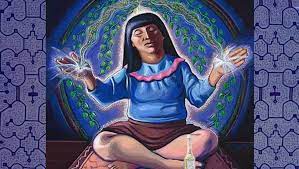
Maestra Icareando
Where do Icaros’ music and lyrics come from?
Psychologist and researcher Susana Bustos wrote her doctoral thesis on the origins and application of the Icaros. Her profound and unique vision clarifies how ethereal and difficult to understand in terms of our reality this Amazonian musical practice is.
Ella Bustos explains in her thesis that shamans or Ayahuasca Masters learn the Icaros through years of training and communion with the plants, whose powers they must use for healing purposes. This training is commonly known as the “Diet,” and is the practice from which the diet prior to the ayahuasca ceremony comes.
During the «diet,» which can last from several months to several years, shamans spend time isolated from the tribe, fasting on a basic diet that includes rice, cassava, bananas, fish, and some jungle animals. They commune with the Master Plant once or several times a day (sometimes they skip a day), gradually gathering power, insight and knowledge of the spiritual world. Aside from food, they also abstain from all other activities, leaving ample space for ayahuasca to reconfigure them.
Throughout their training, future shamans gradually establish a close connection with their plant teachers such as Ayahuasca, Bobinsana, Sananga and Wachuma just to mention a few. As this resonance grows, the dreams, artistic inspiration, and aptitude of the shaman diversify and develop as well. At some point, the apprentices are given chants and songs, which they must use to call upon lost souls and their spirit allies, and reinforce or modulate the actions of the plant spirits.
This is the first-hand account of the shaman Maestra Carolina about the process of receiving an Icaro: !El Tunche, the protective spirit of the jungle and the flies were singing something, and he made me sing that thing, and repeat it and repeat it, until I got the lyrics and I got the melody¡. Usually, the melody is revealed first, and the Icaro lyrics follow once he remembers them.
There are also other ways to receive Icaros in an Ayahuasca ceremony. Shamans often teach apprentices to sing these sacred melodies. This can be done directly, through explicit practice, or indirectly, by «absorbing» the teacher’s Icaros, along with his other knowledge, over years of training.
Finally, even without having gone through a diet, regular participants often receive Icaros in an Ayahuasca ceremony if they have a pressing need for healing. It is not uncommon to hear spontaneous, improvised singing coming from a member of the ceremony circle; These songs are usually described as coming from «another place», with the individual acting as their medium.
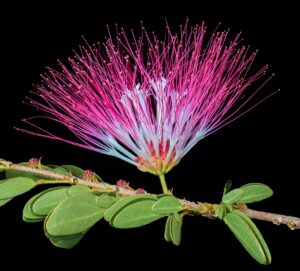
Bobinsana
How are Icaros used?
Although it manifests itself in the form of melodies and lyrics, the music of the Icaro in an Ayahuasca ceremony is actually an expression of otherworldly energy channeled by the patient. Entering an altered state of consciousness, whether through consumption of ayahuasca or through activities such as rhythmic drumming, dancing, shaking or breathing, or a combination of multiple modalities, allows the soul to transcend this reality and establish a connection with other realities.
In this altered state of consciousness, the spirits are invoked and the consensus is reached that the individual who invokes them, the Shaman, will allow them to «take control» to do their work. Thus, shamans basically «hollow themselves» to accommodate the spirits. At that moment, their energies combine and can move through the shaman’s body, coming out in the form of wavelengths that we detect as sound.
However, the Icaro in an Ayahuasca ceremony are not an ordinary sound. In them there is a spiritual content that is beyond the reach of any verbal or musicological explanation. These otherworldly vibrations communicate and resonate with the energetic body of their target. The soul, in whole or in part, can then realign itself according to the plan that the Icaros draw for it. This is how the healing process through the Icaros works.
The Icaros in an Ayahuasca ceremony are dynamic and sometimes completely spontaneous. Depending on what the shaman and spirits can perceive about the patient they are working with, the Icaros generated can heal, protect, or in many different ways induce energetic manipulation to achieve what the patient needs. They can even communicate energies of elemental forces, create ineffable landscapes or kingdoms, induce specific feelings or manifest animal and plant spirits and deities as allies of the patient.
The magic of the Icaros in an Ayahuasca ceremony?
Icaros constitute a fundamental part of healing in ayahuasca ceremonies. Although words are not enough to describe their intangible power, they are an essential weapon in every shaman’s arsenal.
By learning more about the Icaros in an Ayahuasca ceremony, we can understand their importance and increase our sensitivity about their functioning. Opening to feeling your increasingly intricate role in the ceremony can, in turn, allow its healing power to reach its full transformative potential.
Listen an Icaro in an ayahuasca ceremony performed by Maestra Munay

You might also like







Leave A Reply